The Department That Doesn’t Exist
People think they know about Winston Churchill. The wartime leader who gave Britain its strength to stand against the Nazi war machine.
But there was a side that was little known.
His personal library contained a copy of the book Flying Saucers Have Landed.
In 1939 Churchill wrote an essay titled Are We Alone in Space? and concluded “I am not sufficiently conceited to think that my Sun is the only one with a family of planets and, therefore, that our little Earth is unique.”
Churchill appointed a scientific advisor to serve in government, a professor of physics known as ‘The Prof’ to assist with WWII “a war on science… which could be won with new weapons”, and fight a ‘Secret War’.
After a flap of unidentified ‘ghost rocket’ sightings in Europe between 1946-194, Chief Scientific Advisor Sir Henry Tizard suggested the Ministry of Defence set up a ‘Flying Saucer Working Party’ to investigate reports of UFOs. From his office in Whitehall, Tizard used his contacts in America and the Working party collected data during the winter of 1950-1951. However, the final report delivered from the MoD explained the results of the investigations as mistaken identifications of aircraft, birds, optical illusions, hoaxes or sightings by those suffering psychological delusions. Everything else was thrown together under the headings of meteorological phenomena.
Ridiculed for their public belief in UFOs, and research considered a drain on British resources, the conclusions reached by the Flying Saucer Working Party was to dismiss UFOs as “a product of mass psychology.”
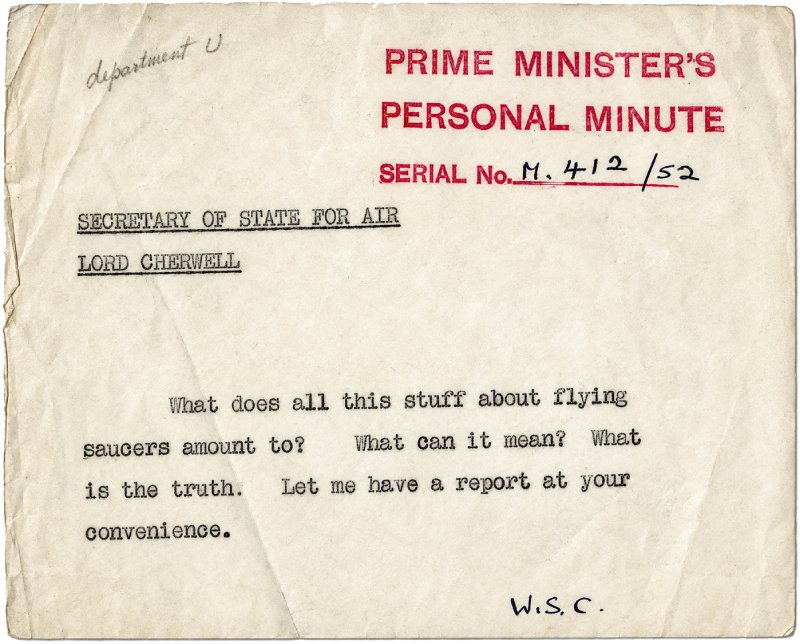
But Churchill wasn’t finished yet. He saw the 1952 UFO flap over Washington DC and noted the concern of the CIA and President Harry Truman. He sent a personal memo to the Air Ministry asking, “What does all this stuff about flying saucers amount to? What can it mean? What is the truth? Let me have a report at your convenience.”
He wasn’t satisfied with the response. The Air Staff concluded all reports could be explained. America’s official report from their Project Grudge investigations stated UFOs pose no threat to the United States national security.
Battles ensued in Whitehall between believers and sceptics so Churchill decided to set up his own secret investigative group. Away from Whitehall.
Joining forces with his old journalist friend Leonard Oldroyd of the Fleet Street based investigative newspaper, the London Intelligencer, a decision was made to pool financial resources and Oldroyd to oversee the new working group.
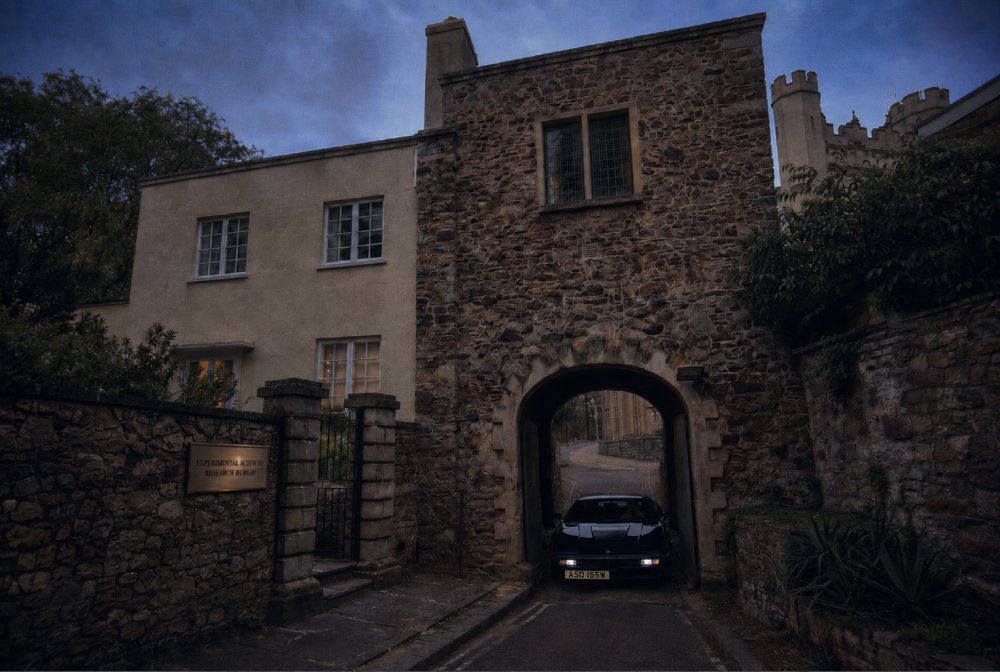
As Chancellor of the University of Bristol, Winston Churchill took over the unused small building on the edge of the campus known as the Royal Fort Gatehouse. Churchill designated this cell as a Section II Facility. On paper, this building was locked off under the Official Secrets Act, conducting classified radar and jet propulsion work for the Ministry of Defence. Outside a small brass sign read Experimental Sciences Research Bureau.
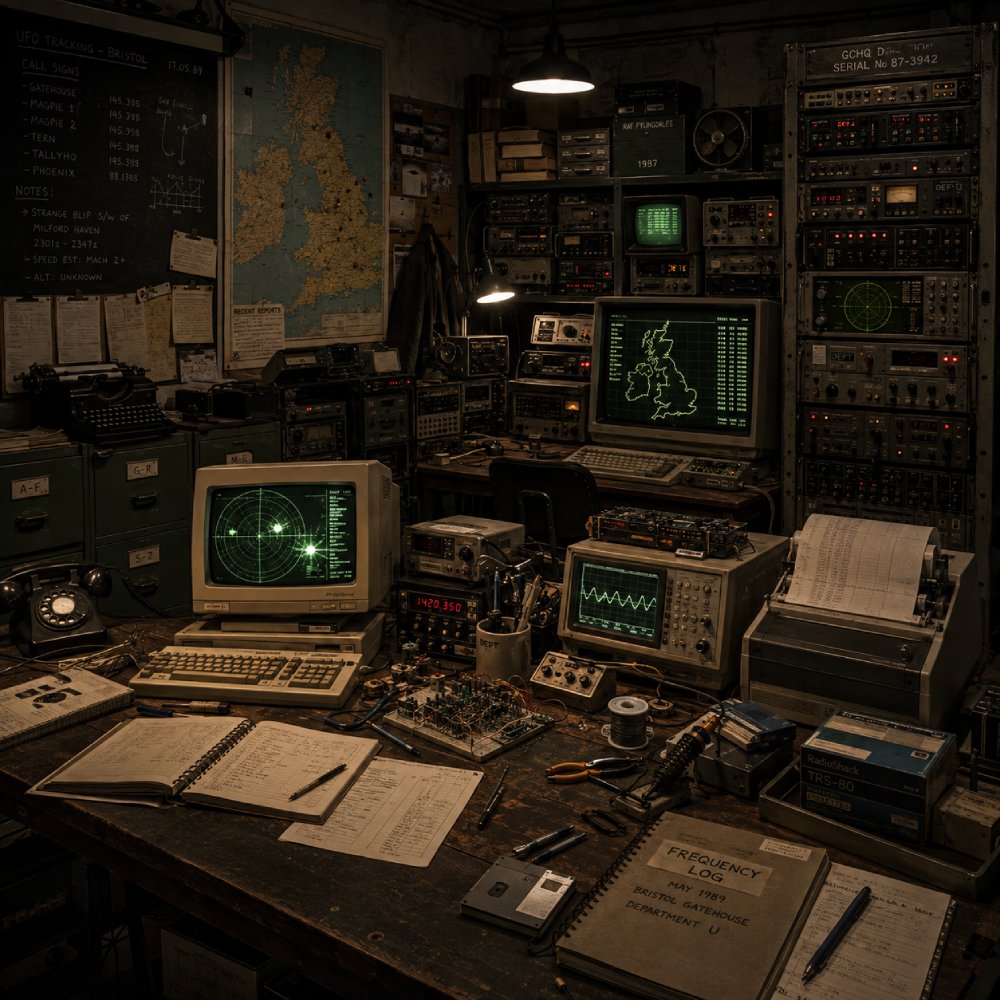
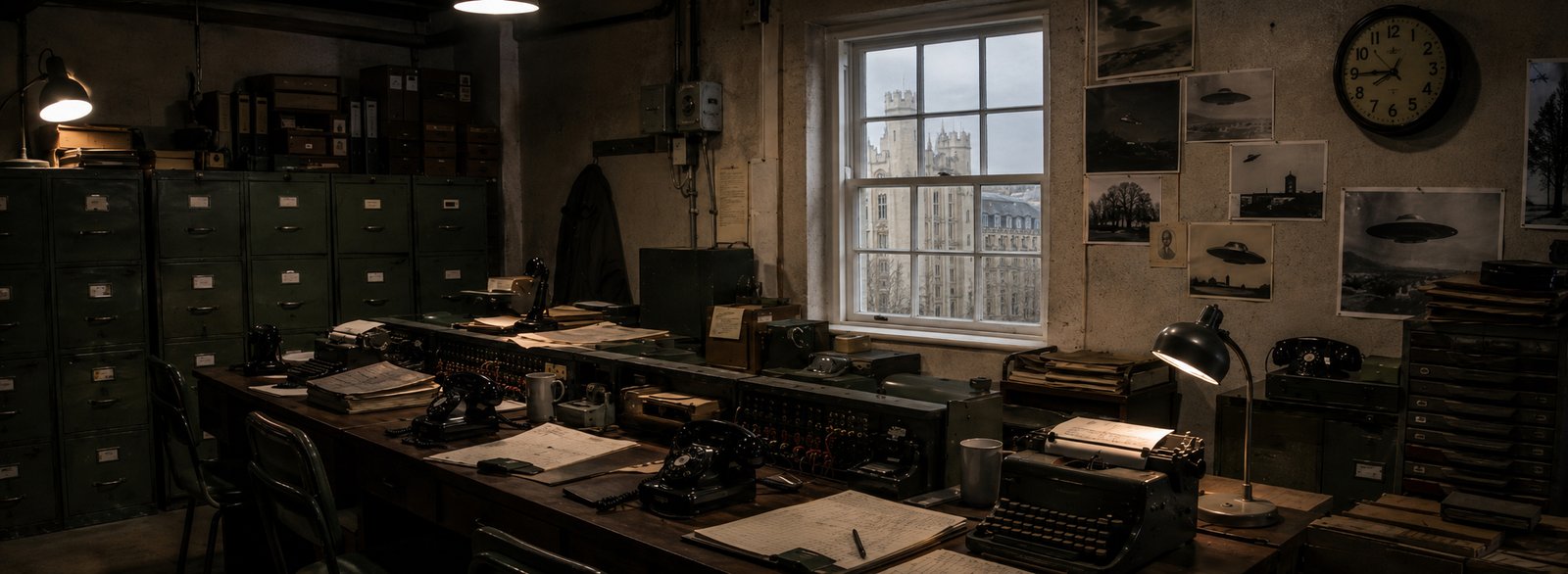
Furnished with equipment, desks, telephones from the abandoned Baker Street office of the Special Operations Executive, members were invite only from the best academic minds of the university.
The London Intelligencer would run adverts on behalf of the Ministry of Defence encouraging anyone with knowledge of UFO, from public sightings to witness accounts and whistle blowers from the military or aviation fields to write in strictest confidence to The UFO Desk. This ‘desk’ was a PO Box where the enquiries were collected and sorted by newspaper staff into piles of importance. These were then copied in secret with the originals being passed onto the MoD Sec(AS)2a.
The copies were sent via motorcycle courier to Bristol, addressed to the Experimental Sciences Research Bureau, and known internally as…